NT Electricity Plans 2026
The Northern Territory has the highest electricity consumption per household in Australia. When it is 35°C and 80% humidity for six months of the year, air conditioning is not a luxury. Jacana Energy is the main retailer. Rates are regulated and there is no residential market competition.
Jacana Energy ~29c/kWh usage, ~90c/day supply. Last updated June 2026.
The NT Market
Jacana Energy is the government-owned retailer serving roughly 85,000 customers. PowerWater runs the grid infrastructure. No private retailers compete for residential customers in the NT. Electricity prices are set annually by the Utilities Commission. The real cost challenge in the NT is volume — a typical Darwin house uses 8,000-10,000 kWh per year, nearly double the national average. Air conditioning alone accounts for 40-60% of that usage.
NT Rates
- Standard tariff: ~29c/kWh usage
- Supply charge: ~90c/day
- Remote communities: ~22c/kWh (subsidised)
- Solar feed-in: 9.1c/kWh (2026)
High Volume Problem
- Typical Darwin home: 8,000-10,000 kWh/year
- National average: ~5,000 kWh/year
- AC accounts for 40-60% of usage
- No residential retail competition
NT Rates
Jacana Energy's standard tariff is about 29c/kWh with a 90c/day supply charge. Remote communities served by Indigenous Essential Services pay a subsidised rate of around 22c/kWh. The unit cost is mid-range nationally, but the sheer volume of electricity the average NT home consumes means bills are among the highest in Australia. A household using 9,000 kWh per year at 29c/kWh faces a usage charge of $2,610 before the supply charge is even added.
Solar in the NT
Darwin gets 8.5 peak sun hours — among the best in the world. Jacana Energy's solar feed-in tariff is 9.1c/kWh in 2026. The NT government offers a solar battery subsidy of up to $6,000 through the Home and Business Battery Scheme. A 6.6kW system in Darwin can generate over 10,000 kWh per year — more than enough to cover the average household's entire consumption. Solar is not just worthwhile in the NT; it is the single best investment for reducing your power bill.
Saving Tips
Every degree lower adds 10% to your cooling cost. Running your air conditioner at 22°C instead of 25°C can add $300-400 to your annual bill in Darwin.
Ceiling fans use 95% less power than air conditioning. Use them together and you can run the AC at a higher temperature while staying comfortable.
The NT's high consumption and world-class sun make solar the best investment. Add a battery (up to $6,000 subsidy available) to store daytime generation for evening AC use.
The NT Concession Scheme provides up to $1,200 per year for eligible households. If you hold a concession card, make sure you are registered.
All Guides · How We Rate Plans · Next: QLD Electricity · Compare Plans
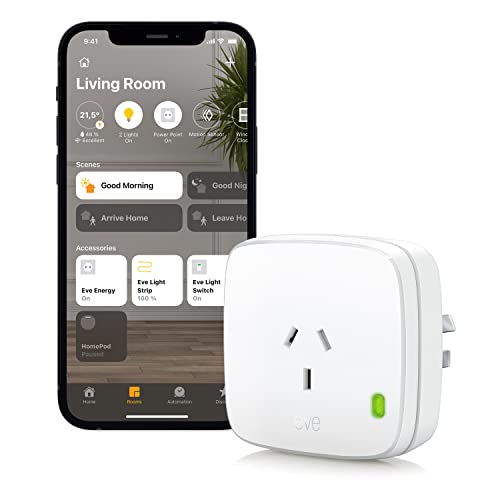
TP-Link Tapo Smart Plug with Energy Monitoring
Track appliance power usage. Works with Alexa & Google Home.
As an Amazon Associate we earn from qualifying purchases.
⚡ Save More With Smart Energy
As an Amazon Associate we earn from qualifying purchases.